

When Community Complaints Go Nowhere One participant described how communities may report environmental harm or…
Across policy spaces, the language of value addition, beneficiation, and industrialisation is gaining traction. This shift is important. For decades, African economies have exported raw materials while importing finished products at higher cost—an economic pattern rooted in colonial design and sustained through unequal global trade regimes. The call to process minerals locally, develop manufacturing capacity, and strengthen regional integration signals a desire to break with that past.
As SARW, we support this ambition. However, we must also ask difficult questions: What kind of industrialisation is being pursued? Who defines its priorities? And most importantly, who benefits?
The global energy transition is often presented as an unquestionable public good. Yet transitions are never neutral. They are shaped by power, capital, and politics. A decolonial reading reminds us that the move toward renewable energy does not automatically dismantle extractive structures. It can, if we are not careful, reproduce them in greener forms.
This is the emerging paradox: the same continent that has borne the ecological and social costs of fossil fuel extraction is now positioned as the supplier of “clean” minerals for global decarbonisation. Without structural shifts in ownership, technology access, and market power, Africa risks remaining at the lower end of global value chains, even if some processing occurs locally.
Value addition must therefore be more than a technical exercise. It must be transformative.
Industrial policy should not simply aim to capture more economic rent; it should aim to redistribute power. This includes strengthening domestic regulatory capacity, renegotiating unjust contracts, and closing tax loopholes. But it also means centring communities living in mining regions, protecting labour rights, ensuring environmental rehabilitation, and embedding gender justice in mineral governance.
Too often, high-level discussions focus on investment frameworks, trade corridors, and global competitiveness while overlooking lived realities on the ground. Artisanal miners, displaced rural communities, women in informal supply chains, and young people seeking dignified employment are not peripheral to this debate, they are central to its legitimacy.
Emerging Environmental, Social and Governance (ESG) standards cannot become a new language of compliance detached from justice. If ESG frameworks prioritise investor confidence over community consent, they risk becoming instruments of reputational management rather than accountability. An African-led approach to sustainability must be rooted in lived experience, customary land governance systems, and collective rights, not simply global reporting metrics.
Engagement with governments, such as our recent submission to the DRC, and participation in national media platforms underscore the importance of shaping public discourse. These spaces matter. They allow us to ensure that debates about minerals are not confined to boardrooms or international summits but are grounded in democratic accountability. Visibility strengthens advocacy, but it also increases responsibility. We must continue to speak clearly about both opportunity and caution.
At stake is not only economic growth, but sovereignty, economic, political, and epistemic. Whose knowledge shapes policy? Whose technologies dominate production? Whose narratives define what a “just transition” looks like?
A genuinely just energy transition must be reparative. It must acknowledge the historical extraction of wealth and labour from African societies and ensure that new mineral booms do not deepen inequality or environmental harm. It must invest in skills, research, and innovation ecosystems within the continent. And it must build industries that are integrated into broader developmental strategies rather than existing as isolated enclaves.Africa’s mineral wealth is a strategic asset. But minerals alone do not guarantee transformation. It is governance, solidarity, and political courage that will determine whether this moment becomes one of emancipation or repetition.
As SARW, our responsibility is to remain both hopeful and vigilant. We champion value addition and industrialisation as pathways to structural change. At the same time, we insist that these pathways be grounded in justice, accountability, and community empowerment. A green future that reproduces old inequalities is not a just transition; it is simply extraction with a new label.
Key Takeaways
- The submission of this report to the DRC government and engagement on national television signal growing recognition of Africa’s central role in the energy transition.
- The global shift to renewable energy creates opportunity but also risks reproducing historical extractive patterns.
- Value addition must be transformative and justice-centred, not merely technical or symbolic.
- Industrialisation should redistribute power and strengthen sovereignty.
- Community voices, labour rights, and environmental repair are essential to legitimacy.
- A truly just energy transition must be reparative, inclusive, and grounded in African-defined priorities.

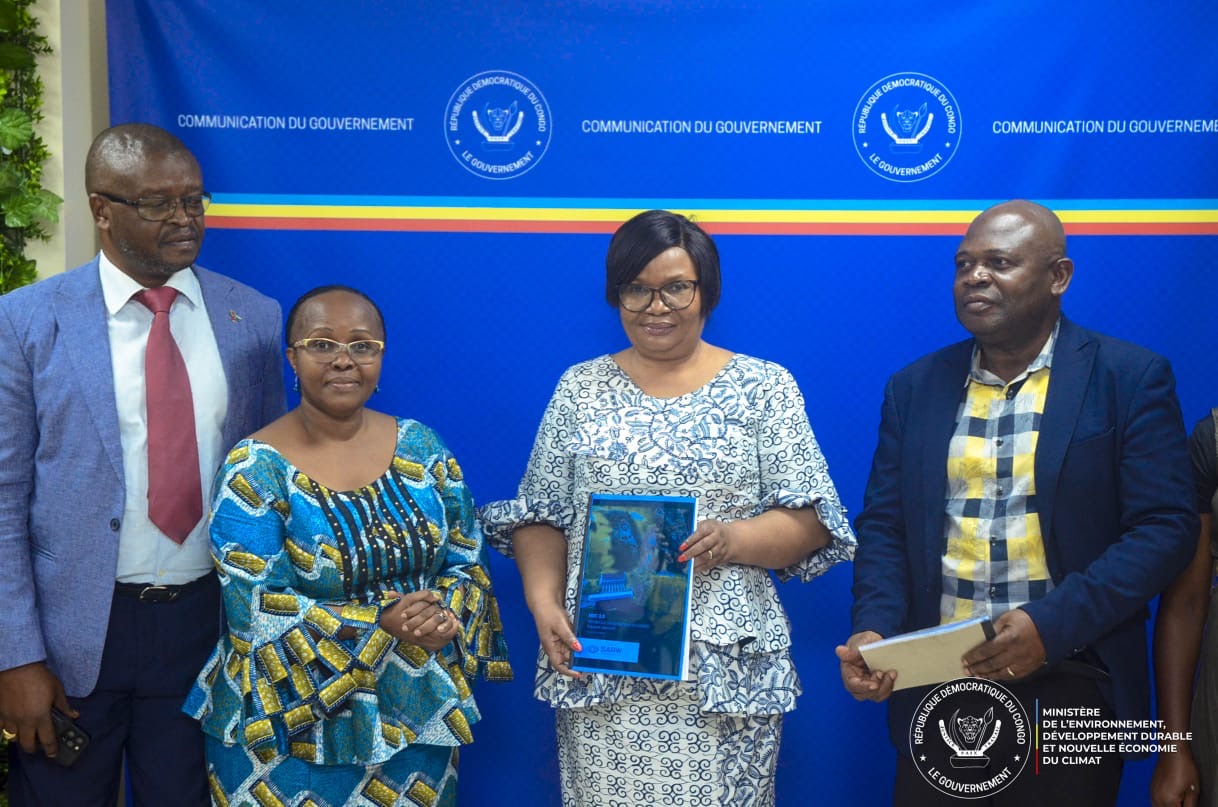
Pictured: The report was received by the Minister of Environment, Sustainable Development and the New Climate Economy of the Democratic Republic of the Congo, Madame Marie Nyange Ndambo.