

When Community Complaints Go Nowhere One participant described how communities may report environmental harm or…

Muchena described the current period as one of profound global leadership uncertainty, arguing that traditional powers are increasingly acting unilaterally rather than cooperatively. Against this backdrop, he suggested that Africa has an opportunity to shift from being a “rule-taker” to becoming a “rule-maker” in the global economy. However, he cautioned that this opportunity could be squandered if African countries continue to pursue fragmented bilateral arrangements with major powers instead of coordinated continental strategies.
According to Muchena, the challenge is not simply to extract more minerals but to dismantle the long-standing enclave model of mining that exports raw materials while generating limited local economic benefits. He called for mineral value chains to be linked directly to domestic demand, industrial development, job creation, and broader economic transformation. The continent, he argued, must use its resource endowment to negotiate fairer trade terms and secure a greater role in shaping global economic governance.

Dr Rukato highlighted what she described as the gap between policy ambition and implementation. While Africa has developed important frameworks such as the African Mining Vision and the African Green Minerals Framework, she argued that implementation at the national level remains weak. She warned that Africa must learn from previous experiences where natural resource wealth failed to generate widespread prosperity.
Using the diamond industry as a cautionary example, Rukato noted that African countries spent decades celebrating their diamond resources while technological innovation elsewhere produced synthetic alternatives that are now reshaping global markets. She called for greater investment in research, innovation, and foresight to anticipate future technological disruptions that could affect today’s critical minerals. Quoting an African proverb, she remarked: “A chameleon that wants to escape a bushfire must abandon the walking style of its ancestors,” underscoring the need for bold new approaches to economic transformation.
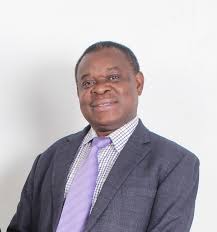
Dr Wekesa challenged prevailing definitions of “critical minerals,” arguing that the concept is often shaped by the priorities of external powers rather than African development needs. He proposed that African countries develop their own definitions of criticality at national, regional, and continental levels before designing policy and negotiating frameworks. Such an approach, he argued, would allow Africa to better align mineral governance with its development objectives.
Wekesa also emphasised the importance of building African expertise in critical minerals diplomacy. He called for stronger support for academic and policy institutions developing specialised training and qualifications in this field, citing the recently launched Critical Minerals Diplomacy programme at Wits University as an example. He proposed the establishment of a network of universities across all 54 African countries offering executive, short-course, and postgraduate programmes aimed at building a new generation of negotiators, policymakers, researchers, and industry leaders capable of advancing Africa’s interests in the global minerals economy.
He further supported proposals for the creation of an association of African Heads of State from green mineral-producing countries to strengthen collective bargaining power, coordinate positions on minerals governance, and help Africa navigate the increasingly complex geopolitics surrounding critical minerals. Drawing lessons from earlier continental initiatives such as the African Renaissance championed by former leaders Olusegun Obasanjo, Thabo Mbeki, and Abdoulaye Wade, Wekesa argued that visionary political leadership remains essential to driving continental momentum.
Contributing to the discussion, Davie Malungisa, Senior Advisor at SARW, raised concerns about the energy constraints threatening Africa’s industrialisation ambitions. He noted that while Africa is expected to supply many of the minerals required for global decarbonisation, nearly 600 million Africans still lack access to clean and reliable electricity. This contradiction, he argued, exposes the need to connect minerals diplomacy with energy diplomacy and industrial policy.
Malungisa highlighted the deindustrialisation risks already emerging in South Africa’s chromium and manganese smelting sectors due to uncompetitive electricity tariffs. He called for greater attention to affordable energy pricing, regional grid integration, and investments in strategic energy infrastructure. Particular attention was given to the Grand Inga Hydropower Project in the Democratic Republic of Congo, which has a potential generation capacity of approximately 44,000 megawatts but remains unrealised. He argued that projects such as Grand Inga could provide the energy foundation required to support mineral beneficiation, manufacturing, regional value chains, and Africa’s broader Just Energy Transition (JET).
A recurring theme throughout the webinar was the need for Africa to move beyond slogans about value addition and instead pursue technically grounded and realistic industrialisation strategies. Speakers highlighted examples from countries such as Ghana and China to illustrate how long-term planning, infrastructure investment, institutional capacity, and patient policy implementation are essential for transforming mineral wealth into economic development.
The webinar concluded with a strong call for collective African action. Participants agreed that the current surge in demand for critical minerals presents a rare but time-sensitive opportunity for Africa to strengthen its bargaining position, accelerate industrialisation, and finance development on its own terms. They also recognised that this opportunity will require stronger institutions, greater regional coordination, investments in knowledge and innovation, and a willingness to break from historical patterns that have left the continent dependent on raw material exports.
Importantly, the event marked the launch of a broader SARW Critical Minerals Diplomacy Dialogue Series, which will convene policymakers, academics, parliamentarians, civil society organisations, industry actors, and regional institutions to advance discussions on minerals governance, industrialisation, energy diplomacy, and economic sovereignty. The dialogue series aims to contribute to a more coordinated African response to the rapidly evolving geopolitics of critical minerals and to help ensure that Africa’s resource wealth becomes a foundation for sustainable and inclusive development.