

When Community Complaints Go Nowhere One participant described how communities may report environmental harm or…
Highlights and Major Wins in 2025
One of the most significant milestones of 2025 was the successful launch of the Africa Mining Accountability Platform (AMAP). – Download Here –
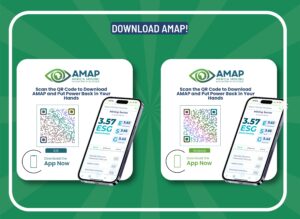
Introduced at the Mining Indaba in Cape Town, AMAP represents a major step forward in SARW’s work to leverage digital tools for transparency and accountability in the mining sector. The platform was designed to enable communities, civil society organisations, researchers, journalists and policymakers to document, monitor and analyse environmental, social, and governance concerns linked to mining activities across the region. By making information accessible and verifiable, AMAP strengthens evidence-based advocacy and provides a mechanism through which communities can assert their rights and demand accountability from both state and non-state actors. The positive reception of AMAP throughout the year underscored a shared recognition that transparency and data-driven engagement are essential to improving mining governance outcomes.
Beyond AMAP, 2025 was a year of deepened and expanded partnerships. SARW strengthened collaborations with academic institutions across the region, including Great Zimbabwe University, Copperbelt University in Zambia and Université de Lubumbashi in the Democratic Republic of Congo. These partnerships have advanced joint research initiatives and supported community-focused knowledge production in mining-affected areas. A key outcome of this work has been progress toward the development of a Sustainability Atlas that brings together mineral mapping with social, environmental and governance indicators. This initiative reflects SARW’s commitment to interdisciplinary, locally grounded research that informs advocacy and policy reform while remaining responsive to lived community realities.

Throughout the year, SARW also consolidated its role as a trusted convener and thought leader within regional and continental civil society spaces. We participated in high-level dialogues on mining, economic development and fiscal governance at events spanning Mozambique, Zambia, DRC, Ethiopia, Madagascar and South Africa. Our engagements allowed SARW to contribute to strategic discussions on governance reform, gendered approaches to extractive justice and the importance of narrative power in shaping policy debates. These engagements strengthened solidarity across movements and reinforced the need for coordinated civil society responses to emerging challenges in the mining sector, particularly in the context of the global energy transition and growing demand for critical minerals.
Policy engagement and advocacy remained central to SARW’s work in 2025. Across multiple countries in Southern and Central Africa, SARW contributed to dialogues on mining governance, public finance management, corporate accountability and environmental justice. Through research outputs, convenings and strategic communications, we amplified community voices and highlighted systemic gaps in regulatory frameworks and enforcement. Our work this year continued to demonstrate that inclusive, transparent governance is not only a policy imperative but a prerequisite for sustainable development and social justice.
Looking Forward
As we look ahead to 2026, SARW enters the new year with renewed focus and ambition. Building on the foundation laid in 2025, we will prioritise expanding the reach and practical use of AMAP, with particular emphasis on community engagement, capacity-building and platform uptake among civil society actors, journalists and regulators. Strengthening local ownership of accountability tools remains a key objective, as does ensuring that community-generated data informs advocacy and policy reform processes.
In the coming year, SARW will also continue to invest in strategic partnerships and multi-stakeholder collaborations. We aim to deepen alliances with academic institutions, civil society networks, and regional actors to support rigorous research, collective learning and coordinated advocacy. Particular attention will be given to issues arising from the extraction of critical minerals, climate and energy transition governance, and the socio-economic impacts of mining on women and marginalised communities.
Central to our vision for 2026 is a continued commitment to narrative justice. SARW will work to challenge dominant extractive sector narratives, elevate community-centred perspectives and ensure that gendered power dynamics are meaningfully addressed in policy, law and practice. Through convening, learning and influencing, we seek to contribute to governance systems that are responsive, accountable and rooted in the lived experiences of those most affected by extractive activities.
As we close the year, SARW extends sincere gratitude to our partners, funders, community leaders, researchers and allies whose support and collaboration made our work in 2025 possible. Your commitment strengthens our collective ability to advance accountability and justice in Africa’s extractive sectors.
From all of us at SARW, we wish you a purposeful start to the new year.